
Introduction:
Drone cameras have revolutionized how we capture aerial perspectives of landscapes, events, inspections, and aerial data. Still, camera stability still poses a significant challenge for even the best capabilities of modern UAVs. Without stabilization, footage captured with a drone will be shaky, unusable, and generally distorted because of wind, vibration, and sudden movements.
Today, stabilization technology represents a central component of drone innovation to enable creators, filmmakers, surveyors and businesses to produce usable, stable, and professional-grade footage. In this blog, we will unpack the definition of stabilization, how stabilization works, why stabilization is required in modern drones, and what leading drone companies including India's No. 1 drone brands do to achieve impressive stabilization loaded with trending technology concepts around drone flight controls.
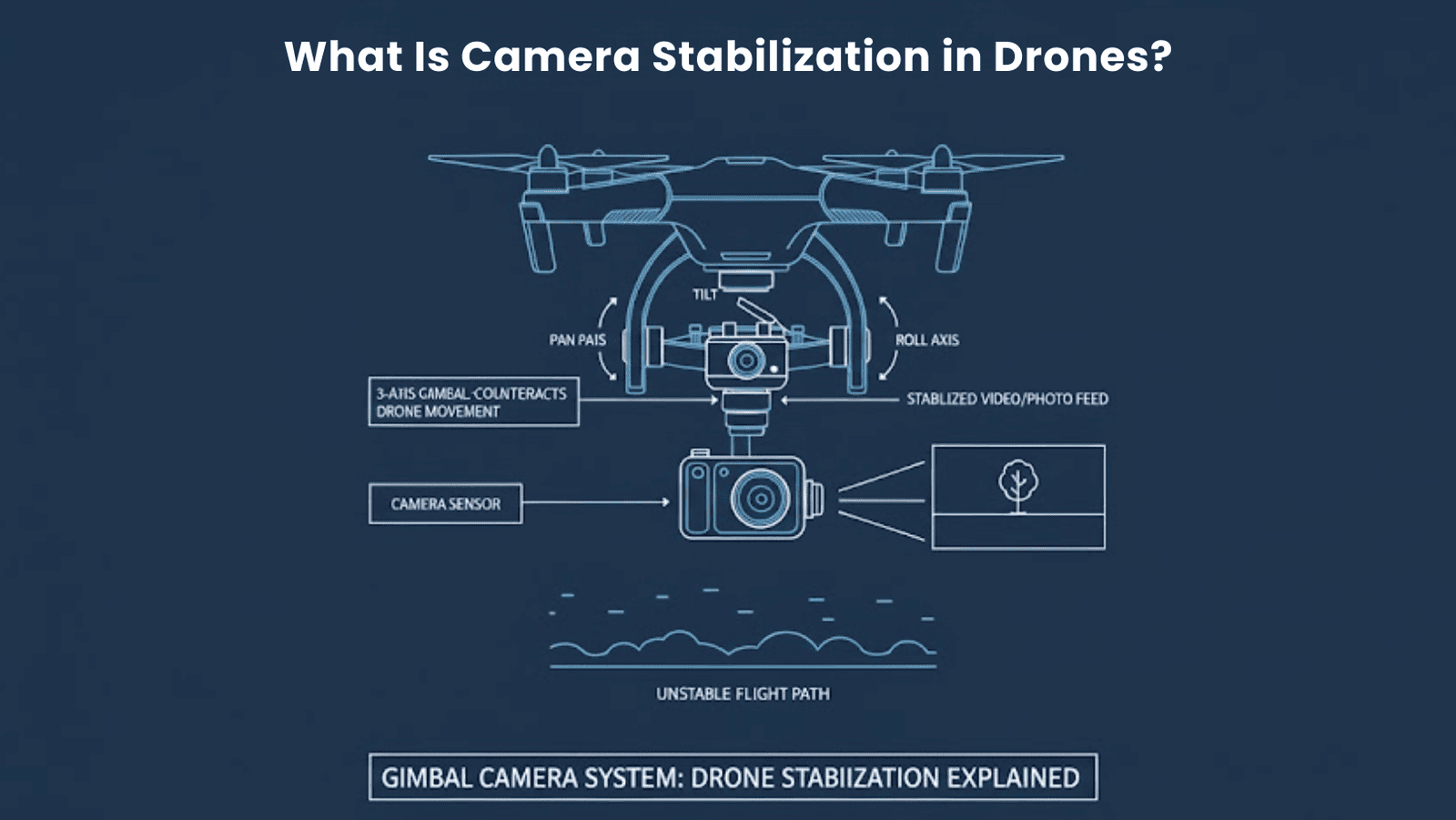
1. What Is Camera Stabilization in Drones?
Camera stabilization in drones is the technology that makes sure the footage is smooth and steady despite:
High winds
Unexpected movements
Motor vibrations
Rapid directional changes
A change in altitude (higher & lower)
Stabilization keeps the camera level and separate from the drone's movements so that you receive cinematic quality videos and good quality images.
This feature is important for:
Aerial cinematography
Real Estate Videography
Wedding videography
Search & rescue
2. The Importance of Stabilization
Stabilization is not simply a nice-to-have feature but rather a necessity.
Smooth Cinematic Footage:
Stabilization's main purpose is to eliminate jitters, shakes, and blurriness to produce a flicker-free video and make it look cinematic.
Professional Data Precision:
In industries such as agriculture, construction, and mapping, stable aerial images produce the most accurate pictures and data calculations.
Easier User Experience:
Even those new to flying will be able to get the footages they want, even without expert piloting capabilities.
Safety Improvement:
Stable footage can help the pilot or operator better see what is around the drone when it is operational.
Improved Low Light Performance:
In low light or at night, a stable camera will prevent motion blur to produce better images.
This is why stabilization technology is viewed as a number one modernization feature for commercial and hobbyist/enthusiast drone owners in India.a. Mechanical Stabilization (Gimbals)
Mechanical stabilization is the most trusted and widely used method on India’s top commercial drones. Most professional drones rely on gimbals to capture crystal-clear, stable footage even when the drone is flying fast, facing strong winds, or making sharp turns.
Mechanical stabilization is the most trusted and widely used method on India’s top commercial drones. Most professional drones rely on gimbals to capture crystal-clear, stable footage even when the drone is flying fast, facing strong winds, or making sharp turns.
How a Gimbal Works
A gimbal is a special camera holder that uses motors, sensors, and a gyroscope to keep the camera stable.
No matter how much the drone moves, the gimbal ensures the camera remains steady and pointed in the correct direction.
A gimbal is a special camera holder that uses motors, sensors, and a gyroscope to keep the camera stable.
No matter how much the drone moves, the gimbal ensures the camera remains steady and pointed in the correct direction.
Types of Gimbals
2-axis gimbal (Pitch + Roll)
Stabilizes up-and-down movement and side-to-side tilt. Suitable for basic videography.
3-axis gimbal (Pitch + Roll + Yaw)
Stabilizes movement in all directions.
This is the most stable and most commonly used gimbal type for professional drone cameras.
2-axis gimbal (Pitch + Roll)
Stabilizes up-and-down movement and side-to-side tilt. Suitable for basic videography.3-axis gimbal (Pitch + Roll + Yaw)
Stabilizes movement in all directions.
This is the most stable and most commonly used gimbal type for professional drone cameras.
Advantages of a Gimbal
Ultra-smooth, cinematic-quality videos
Reduces vibrations and unwanted jerks
Maintains stability even in windy or shaky conditions
Provides better framing control for creators and surveyors
Ideal for both photography and videography
Ultra-smooth, cinematic-quality videos
Reduces vibrations and unwanted jerks
Maintains stability even in windy or shaky conditions
Provides better framing control for creators and surveyors
Ideal for both photography and videography
Best Suited For
Filmmaking and cinematography
Real estate property shoots
Wedding and event coverage
Agricultural mapping and field surveys
Industrial inspections
Travel and adventure shoots
Filmmaking and cinematography
Real estate property shoots
Wedding and event coverage
Agricultural mapping and field surveys
Industrial inspections
Travel and adventure shoots
b. Digital Stabilization (EIS – Electronic Image Stabilization)
Electronic Image Stabilization is a software-based stabilization method mainly seen in budget or lightweight drones.
Instead of using motors, it uses smart algorithms to reduce shakes and fix small vibrations in the final video.
Electronic Image Stabilization is a software-based stabilization method mainly seen in budget or lightweight drones.
Instead of using motors, it uses smart algorithms to reduce shakes and fix small vibrations in the final video.
How EIS Works
EIS analyzes each frame of the video and automatically adjusts or crops it to counteract the drone’s movement.
It helps produce smoother footage without adding extra weight to the drone.
EIS analyzes each frame of the video and automatically adjusts or crops it to counteract the drone’s movement.
It helps produce smoother footage without adding extra weight to the drone.
Advantages of EIS
Very lightweight, no mechanical parts
More battery-efficient compared to mechanical gimbals
Affordable and suitable for entry-level drones
Performs well when shooting short clips or casual content
Very lightweight, no mechanical parts
More battery-efficient compared to mechanical gimbals
Affordable and suitable for entry-level drones
Performs well when shooting short clips or casual content
Limitations
Not as stable or smooth as a mechanical gimbal
Results in slight cropping of the video frame
Struggles in windy conditions or fast drone movement
Not ideal for professional filmmaking work
Not as stable or smooth as a mechanical gimbal
Results in slight cropping of the video frame
Struggles in windy conditions or fast drone movement
Not ideal for professional filmmaking work
Best For
Budget-friendly drones
Toy drones for kids
Lightweight FPV drones
Beginner drone pilots
Indoor flying and casual recordings
Budget-friendly drones
Toy drones for kids
Lightweight FPV drones
Beginner drone pilots
Indoor flying and casual recordings
4. Gimbals: India’s Most Advanced Drone Technology
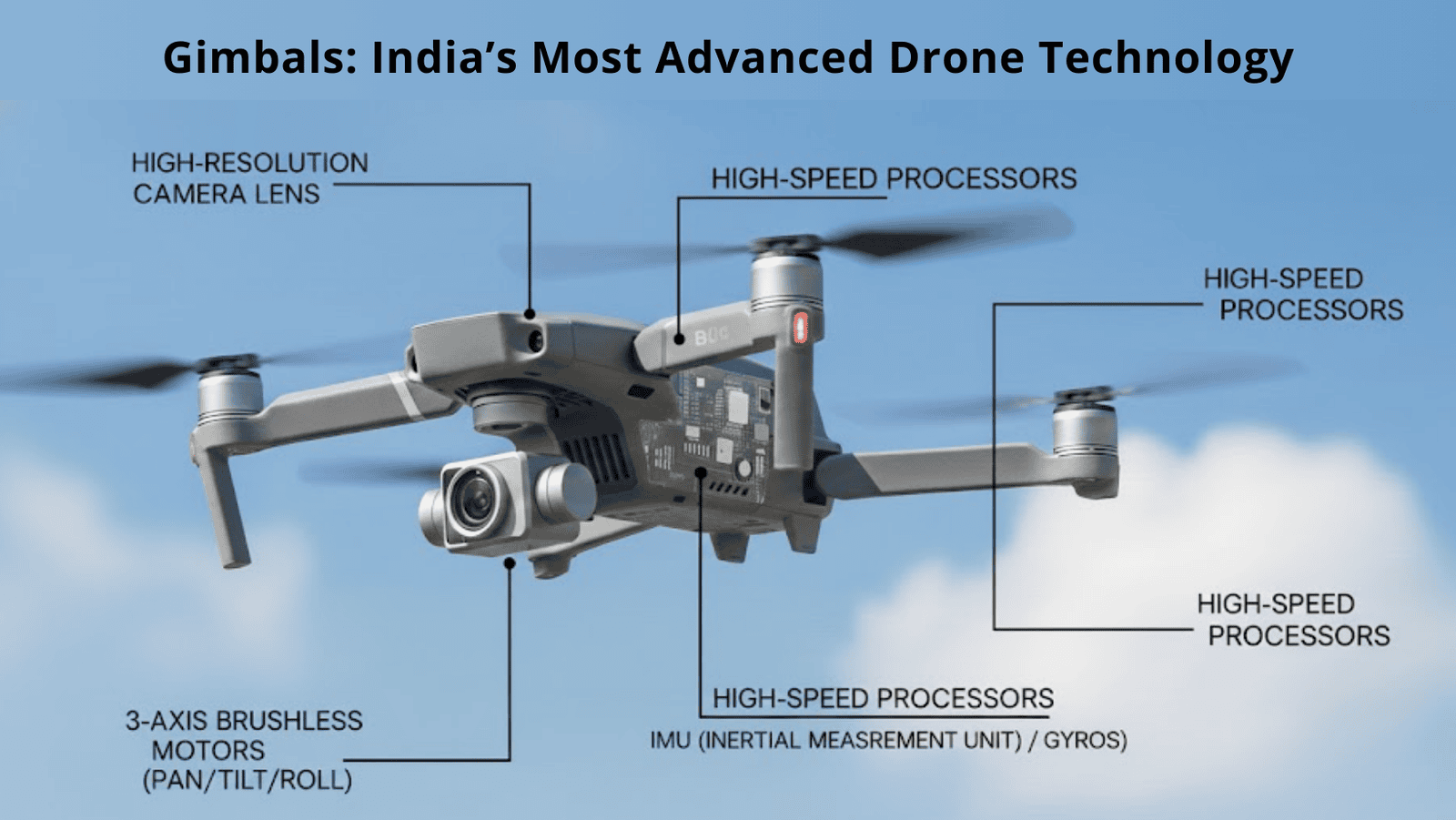
Gimbals utilize a collection of trending technologies such as:
IMU (Inertial Measurement Unit)
Brushless motors
High-speed processors
Gyros
Vibration absorbers
Once the drone tilts or shakes, the sensors react and the gimbal motors reposition the camera almost instantly within milliseconds.
This is why professional drones can capture silky smooth cinematic footage and imagery, even in high winds.5. Elements That Impact The Stability of Your Drone Camera
Even with the best gimbal, external factors play a role:
Wind Speed: More wind = more instability.
Modern drones utilize wind resistance technology to counter this.
Vibrations From The Drone Motor
Brushless motors reduce vibrations, producing smoother footage.
Drone Speed & Movement
Flying at high speeds can shake the camera without stabilization.
Drone Weight & Build Quailty
Light weight carbon-fiber construction can help your stabilization.
Propeller Balance
6. Technologies for Improving Stabilization
The drone industry relies on a few trending technologies to help stabilize drones:
3-Axis Gimbal Motors
Provides a high level of stabilization.
EIS (Electronic Image Stabilization)
Reduces minor shakes via software.
OIS (Optical Image Stabilization)
Usually seen in high-end drone cameras to produce a sharper image.
GPS Position Hold
Keeps the drone from moving, and allows you to make even steadier shots.
Vision Sensors
The downward, forward, and side sensors help stabilize indoors.
Shock Absorption Mounts
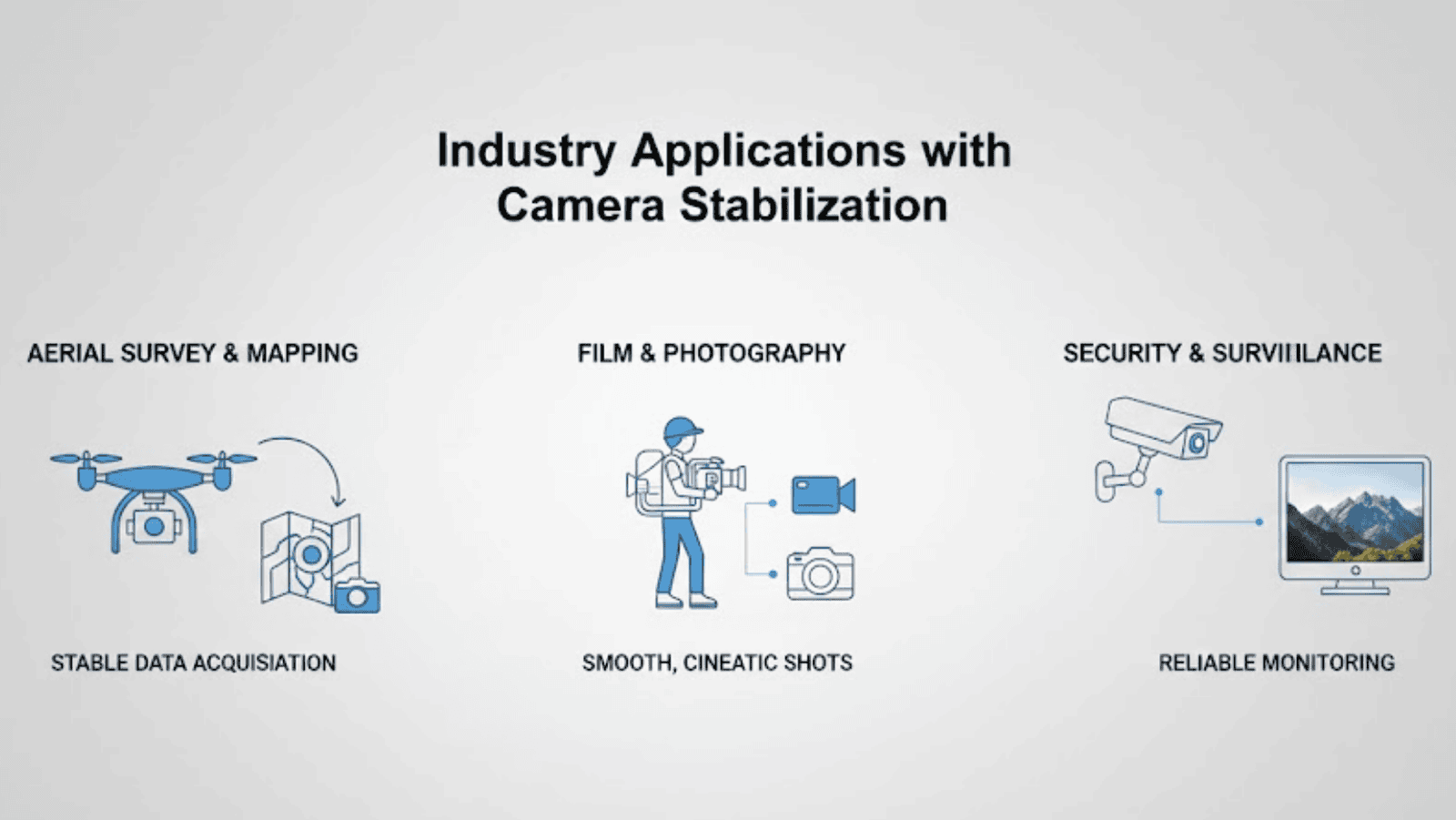
7. Industry Applications with Camera Stabilization
Films & Cinematics
Outstanding cinematic aerial shots are ONLY possible when stability is being used.
Stable images allow accurate NDVI mapping, crop analysis, and land measurement.
Real Estate
The builders utilize smooth aerial videos in marketing the properties.
Event Filming
Drone is becoming common in documenting the wedding, festival, sports, and concert events.
Search & Rescue
Stable thermal footage assists consistent teams to find a missing location.
Industrial Inspection
Stable and crisp footage is important for inspection such as:
Wind turbines
Towers
Solar farms
Bridges
8. New Technology in Drone Camera Stabilization (2025)
AI stabilization systems
4K and 8K stabilized drone cameras
FPV drones with Gyroflow stabilization
Autonomous flight stabilization
Ultra-light carbon gimbals
Night vision + low light stabilization technologies
9. The Future of Drone Camera Stabilization
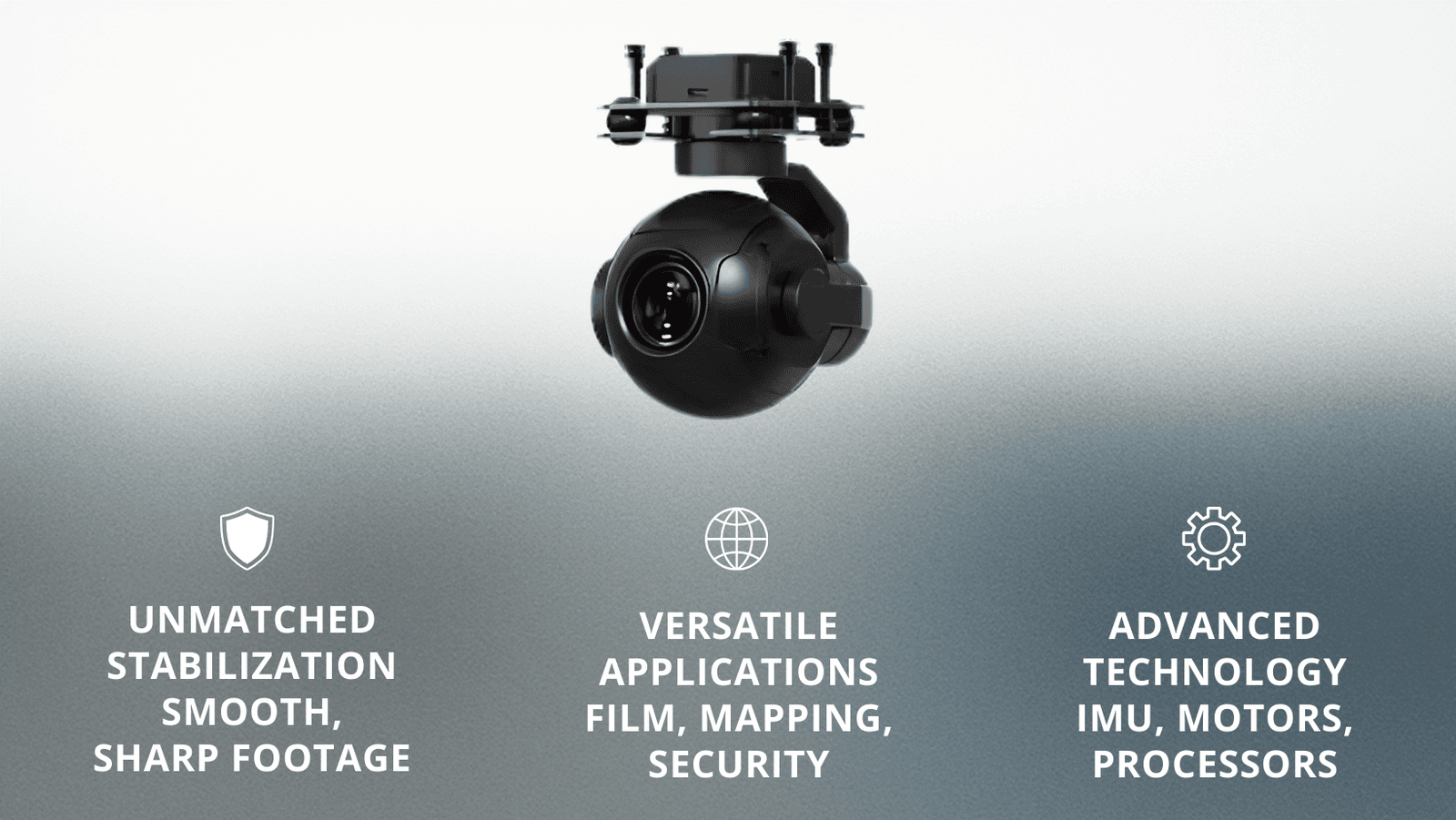
The future looks very bright with:
AI Smart Gimbals
Predicting movement before movement occurs.
Zero-Vibration Frames
Constructed using advanced composite materials.
Mechanical + Digital Hybrid Stabilization
Combining a gimbal + EIS for perfect videos.
Fully Autonomous Stabilization Systems
The drone automatically changes the camera settings, depending on weather.
Compact 3-Axis Gimbals for Mini Drones
Conclusion:-
Stabilization is the centerpiece of drone videography. Whether you are a filmmaker, farmer, inspector or professional hobby pilot, stable footage can help improve accuracy, quality and professionalism.
With India becoming a global center for drone technology and innovation, the demand for India’s No.1 stabilized drone cameras continues to grow. As technology changes, we will soon see drones producing smoother, sharper and more cinematic videos than ever before. The future of aerial video production in the beautiful stable future is here.