
Introduction
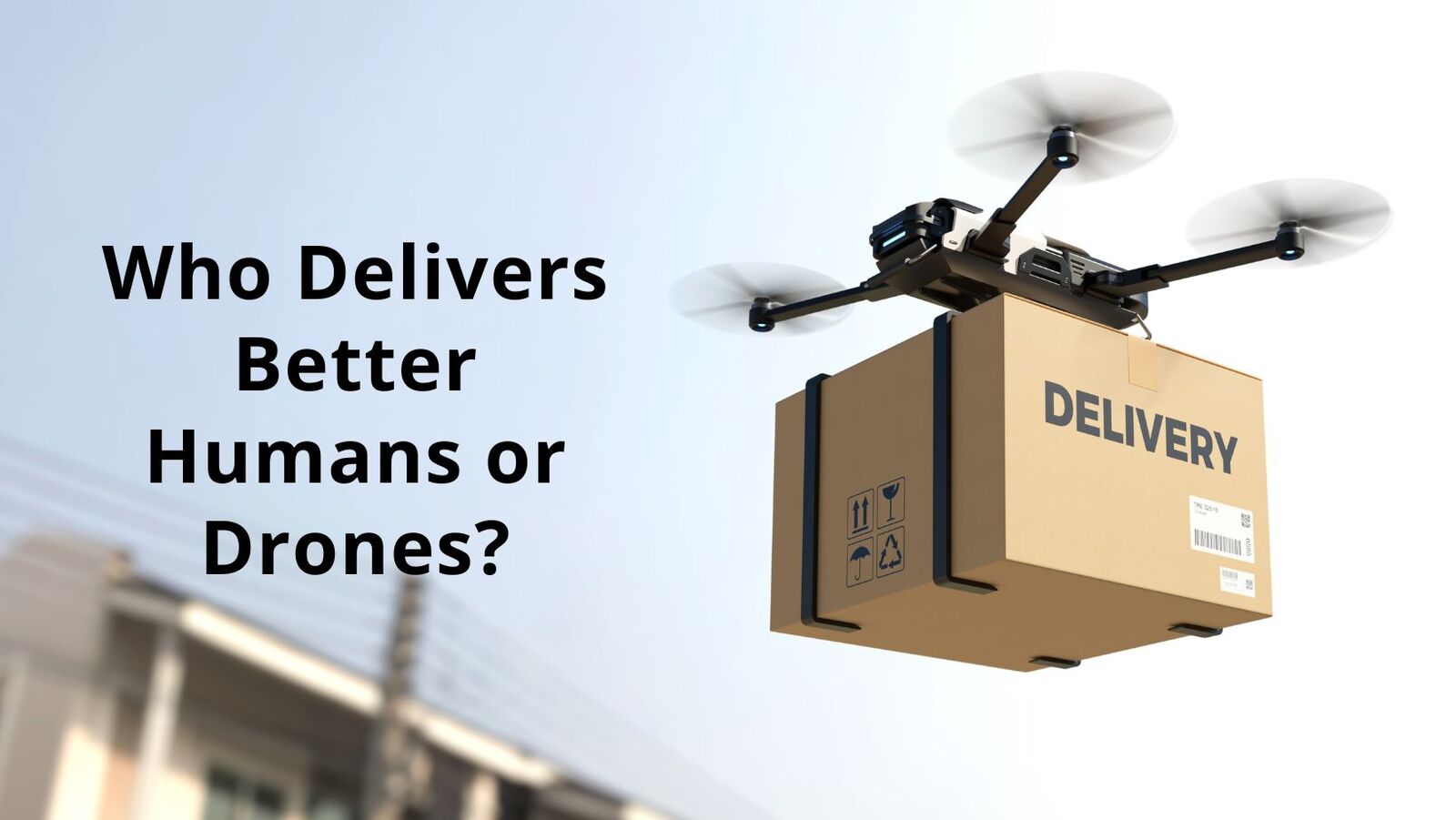
In recent years, drones have gone from no more than flying gadgets or photography tools to the central figures of a whole big industry, shipment delivery. Drones are changing how everything, from food to medicines and small packages, reaches our doorsteps.
Several companies across the world are either testing or already using drone delivery mechanisms, as they are faster, safer, and more efficient compared to traditional methods. This blog will explain how drones are taking the place in the world to deliver goods, how the drones are going to work, the benefits of the drones, and what lies in store for drone delivery.
1. Describe Drone Delivery.
Drone delivery is a way to use an unmanned aerial vehicle (UAV) to move packages from one place to another. These drones can be operated remotely by skilled pilots or they can fly themselves (autonomously). Typically, they transport tiny and medium-sized goods, including:
Medication
Food Products
Documents
Emergency Supplies
Consumer Electronics
2. How do drone deliveries operate?
2. How do drone deliveries operate?
Delivery by drone is quite simple.
Step 1: Receiving the Order
An app or website is used by a customer to place an order.
Step 2: Loaded Package
Put the item safely inside the drone's carrying box.
Step 3: Route Scheduling
The drone's technology uses sensors and GPS to determine the route.
Step 4: Self-Driving Aircraft
The drone takes off and travels along its path, avoiding obstacles with the help of cameras and sensors.
Step 5: Transportation
When the drone reaches the customer's home, it either lands momentarily in a safe spot or lowers the package using a rope system. The drone typically hovers over a house instead of landing, gently dropping the box upon the front porch with a robust rope before automatically releasing it as it takes off. Since all drone deliveries are pre-paid, consumers never pay at the door. Before the drone ever takes flight, customers may use an application to track it in real time and make an online payment. Customers may verify that the package is genuine and not a fake by watching the drone take a picture or a little video after it has been dropped.3. Why is drone delivery growing in popularity?
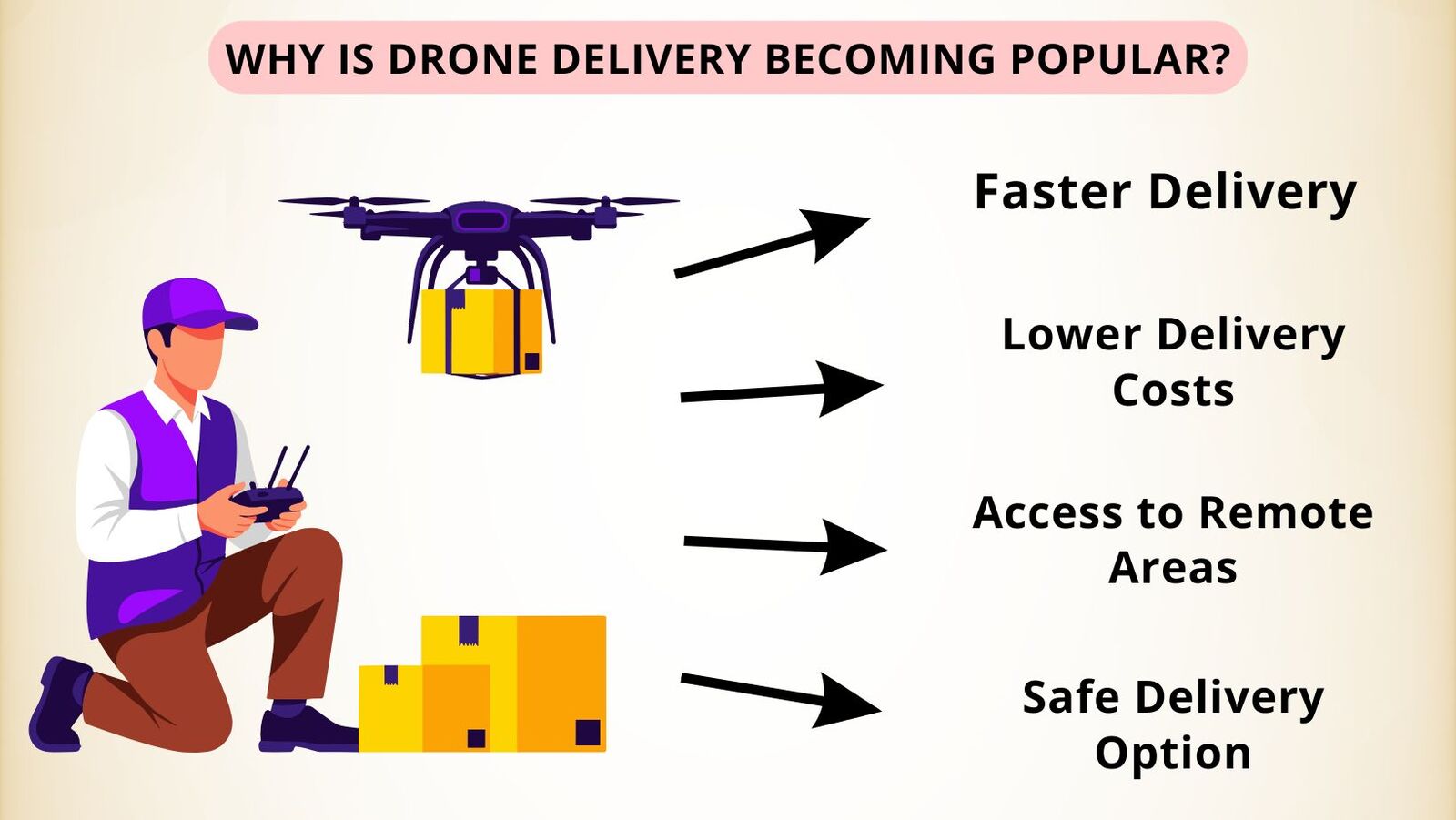
Drone delivery is expanding because it addresses a lot of practical issues.
These are the main causes:
Faster Delivery: Drones can avoid obstacles and traffic by flying straight through the air. By air, a trip that takes 30 minutes by road might just take 5 to 10 minutes.
Lower Delivery Costs: Companies spend on drivers, fuel, vehicles, and maintenance. Drones significantly lower these costs because they run on batteries and require less workforce.
Access to Remote Areas: Some locations are hard to reach due to:
Floods
Hills
Village areas
Damaged Roads
- Environment-Friendly:
Drone delivery is much cleaner compared to traditional delivery vehicles. Since drones run on rechargeable batteries, they produce lower carbon emissions and contribute to less air pollution. They also support eco-friendly delivery cycles, helping companies reduce fuel consumption and promote greener logistics for the future.
Drone delivery is much cleaner compared to traditional delivery vehicles. Since drones run on rechargeable batteries, they produce lower carbon emissions and contribute to less air pollution. They also support eco-friendly delivery cycles, helping companies reduce fuel consumption and promote greener logistics for the future.
- Safe Delivery Option:
Drones also offer a safer way to deliver essential items during health emergencies. In situations like pandemics, drone delivery helps by reducing direct human contact, limiting physical interaction between customers and delivery personnel. This makes deliveries safer and helps people maintain social distancing without stopping essential services.
Drones also offer a safer way to deliver essential items during health emergencies. In situations like pandemics, drone delivery helps by reducing direct human contact, limiting physical interaction between customers and delivery personnel. This makes deliveries safer and helps people maintain social distancing without stopping essential services.
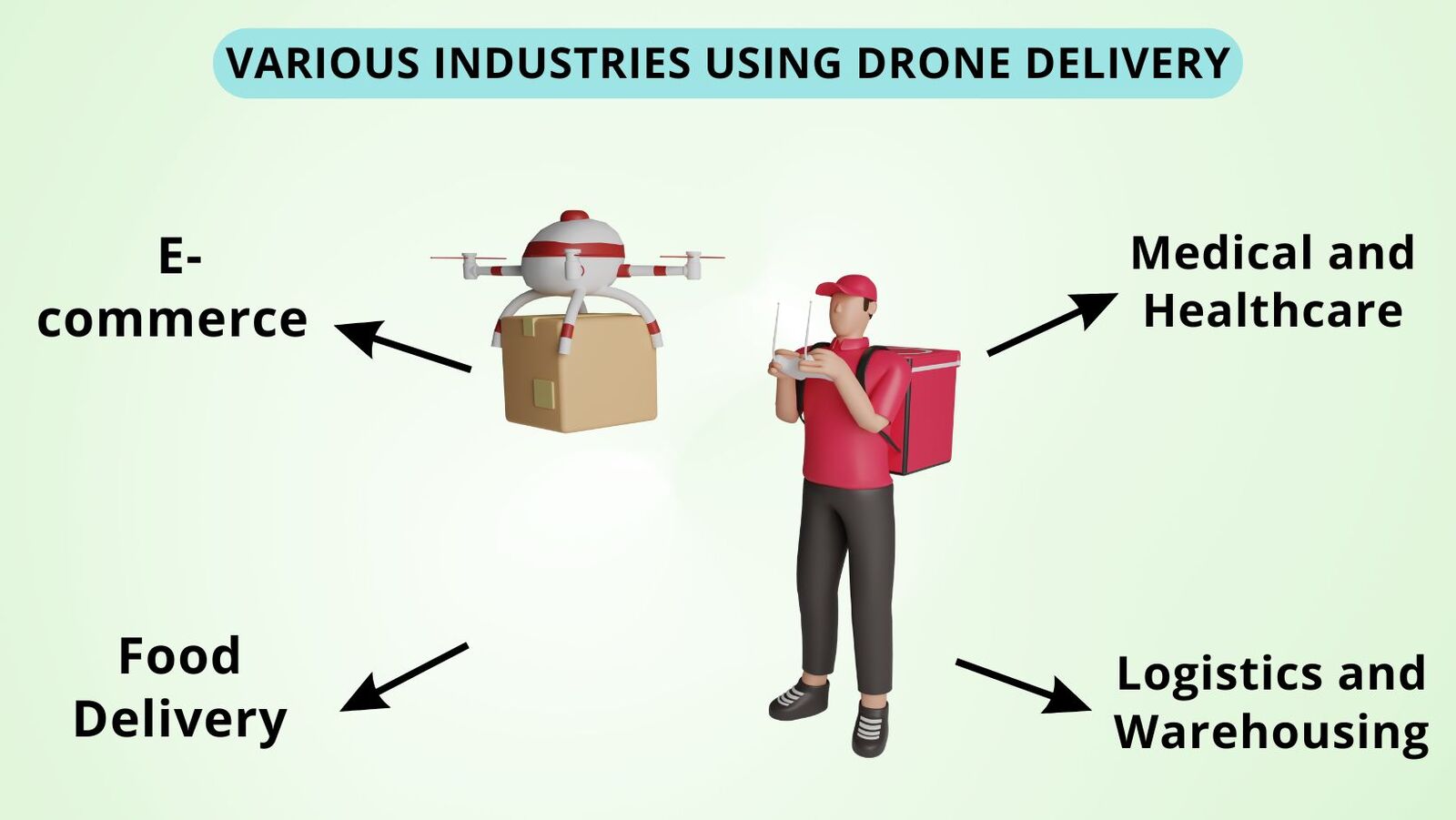
4. Industries using drone delivery:
Drone delivery isn't limited to one sector. Many industries are adopting it for its unique advantages.
Large companies like Amazon are testing drone delivery for quick shipping of small packages. Fast deliveries boost customer satisfaction and lower return rates.
Food Delivery:
Companies like Zomato, Swiggy, and Uber Eats have been trying out drone delivery for hot meals. This cuts delivery time and keeps food fresh.
- Medical and Healthcare:
Delivering vaccines
Transporting blood samples
Carrying emergency medicines
Delivering medical kits during disasters
In many countries, drones have helped save lives by reducing transport time.
Farmers use drones to deliver agricultural supplies like seeds, pesticides, and tools. This increases farm productivity and lowers manual labor. Drones to deliver agricultural supplies like seeds, pesticides, and tools. This increases farm productivity and lowers manual labor.
- Logistics and Warehousing:
5. Technological features that make drone delivery possible:
6. Difficulties with drone delivery:
6. Difficulties with drone delivery:
Despite its potential, drone delivery has certain difficulties.
Government Regulations: Because drone flight raises safety issues, nations impose stringent regulations. To use drones in cities, businesses require special authorisation.
Restricted Weight Capacity: The majority of delivery drones are only able to transport 1 to 5 kg. Traditional vehicles are still needed for heavier packages.
Weather: Storms, rain, and strong winds can all have an impact on flight stability.
Battery Restrictions: The flight range of even the most sophisticated batteries is constrained. Businesses must construct a number of charging stations.
Privacy Concerns: When drones hover overhead and record videos, people are concerned.
7. How Drone Delivery Benefits Customers?
7. How Drone Delivery Benefits Customers?
8. Future Of Drone Delivery
The potential of drone delivery is absolutely phenomenal. We will witness drone delivery centers in urban areas in the next few years, which will even have rooftop stations for UAVs storage and takeoff. Drones will be able to take heavier fold as battery and motor technology keeps on getting better. In fact, deliveries will be made even more accessible with night vision cameras facilitating 24/7 delivery. Fleet AIs will allow UAVs to talk to one another thereby lessening the chances of collisions and improving air traffic patterns.
Also, package security will get better through smart locks and digital verification features that will be used for protecting packages against theft. With the advancement of technology, the total cost will be less and the price may be even lower than the delivery of an average bike. Drones can be expected to become normal in our logistics system just like bike and van delivery services are today.Conclusion
The use of drones for delivery is no longer a long-term vision but rather a viable solution providing faster, safer, and more efficient delivery services. Companies in any part of the globe are going to spend money on drone technology, because it reduces the cost, the problem of traffic is avoided, emergency healthcare is supported, and delivery is fast.
Drone delivery will soon be a routine part of our lives as governments introduce better policies and technology keeps on improving. The future of deliveries is in the sky, and drones are leading the way.