1. What Is A Drone Parts Kit?
A kit for drone parts contains either all or most of the major components necessary to make an entire drone from nothing (not pre-assembled). In contrast to pre-assembled drones, users using a kit get to see the whole process from beginning to end; how to build it, how to operate it, and how to understand how it all works. These types of kits offer lots of room to learn and experiment, while also giving users a good degree of customization for those user types (beginning and experienced).
Using a kit from FPV Racing Drone/Drone Parts Kits will provide experience learning about all of the different pieces (frames, motors, ESCs, flight controller, battery, and FPV) and how they work together to achieve a stable and functional drone. Along with providing experience with using a kit to learn various aspects of technology and improve users' skills of problem-solving; troubleshooting is significantly easier in the future when a user has build their own or one that they put together with parts from kits.
Examples of how people use kits for their drones include: FPV Racing and Aerial Imaging, Training, and Hobby Flying. Because kits will allow users to build drones that meet satisfying all requirements and expectations for flying styles, performance expectations, and financial investments.2. Drone Parts Kit Essential Components:
a. Frame
The frame is the foundation of a drone and is used to hold all components of the drone together. The frame also determines the size of the drone, how durable the drone will be, and how strong the drone will be.
b. Motors
The motors provide the power to lift the drone up in the air by providing the ability to pull down on the drone via the propellers.
c. Electronic Speed Controllers (ESCs)
The ESCs control the pseed of the motors by receiving signals from the flight controller and sending power to each motor at a regulated rate.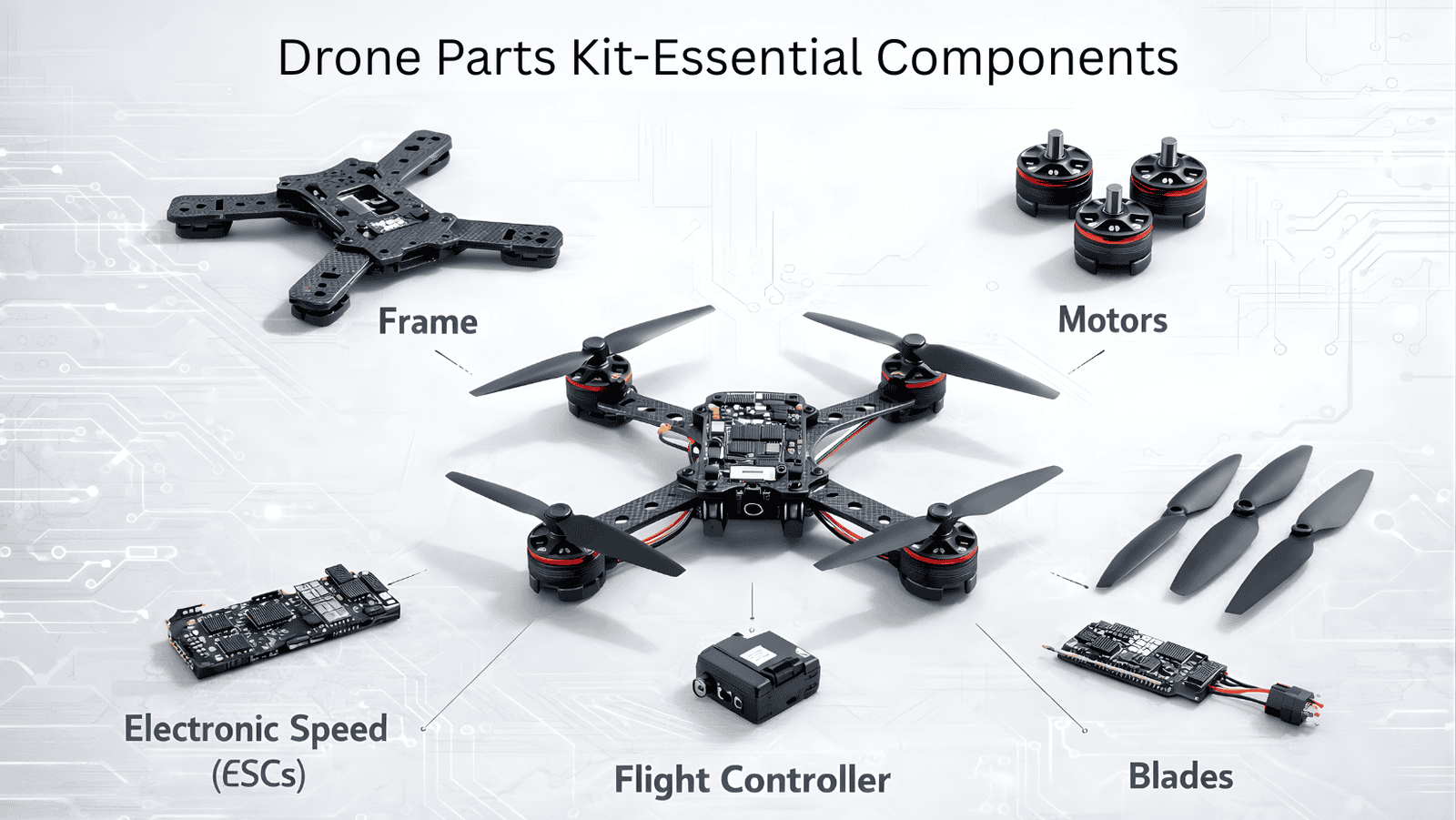
d. Blades
There are multiple blades that allow for both lift and movement. There are a variety of factors that influence the characteristics of the blades, which include: Button size and pitch of the Blade(s) – which directly impacts both speed, stability, and efficiency of flight.
The Flight Controller is the Actual controller (Computer) of the drone. The flight controller is responsible for receiving and analyzing sensory information, and controlling the direction, balance, and stability of the drone.
The Battery is used to supply power to the drone. The Battery charger allows a person the ability to charge the LiPo (Lithium Polymer) batteries safely and efficiently.
g. Remote Control / Transmitter
The Transmitter provides the user with the ability to wirelessly control the throttle, direction, and flight mode of the drone by means of the transmitter.
h. GPS receiver
The GPS Module provides the user with the ability to locate and track the drone, the ability to return-to-home, and provide stable navigation when flying in advanced Modes.
i. FPV Camera and Antennas
FPV provides Real-time video feed of an Image from the drone to either the FPV goggles or the LCD screen and is an immersive experience of flying.
j. Landing Gear
The Landing gear protects the drone when taking off or landing, by keeping the drone components above the surface when taking off or landing.3. Types of Drone Parts Kits
a. Racing Drones:
These are light, fast drones with a lightweight frame and powerful motors. Designed for speed and agility, these components provide the ultimate flying experience for the racing community.
b. Camera Drones:
These drones are designed for professional photographers and videographers. They have a stable foundation for camera mounts so the user can take professional-quality stills or video.
c. Mini/Micro Drones:
These drones are small and can be flown indoors. These kits are good for beginners to learn basic flight skills.
d. FPV Drones:
These drones come with all necessary components to allow the user to fly in real-time, use fpv goggles, and experience flight immersion.
e. RTF versus ARF:
RTF (Ready-to-Fly) kits come fully assembled and require no additional work from the user before flight. ARF (Almost Ready-to-Fly) kits require some assembly by the user before flying.4. What Drone Parts Kit to Choose?
a. Beginner Kits are Available for New Drone Users
Beginners should stick with basic Beginner Kits, experienced builders may want more complex performance based customized kits.
b. What Tool do you want to Build? You Need to Choose Your Drone Parts/Drones Based on What Your Purpose is?
Racing, Photography, Learning to Fly, or long Distance Flying - choose drone parts based on your purpose.
c. Are All the Drone Parts Compatible with Each other?
Make sure all the drone parts in your kit work together or otherwise you will have trouble installing them.
d. Is Everything You Need to Fly a Drone Included With Your Kit?
Be Sure all the essential components of a drone (Motors, ESCs, Flight Controller, etc.) are included in your kit or available for purchase separately.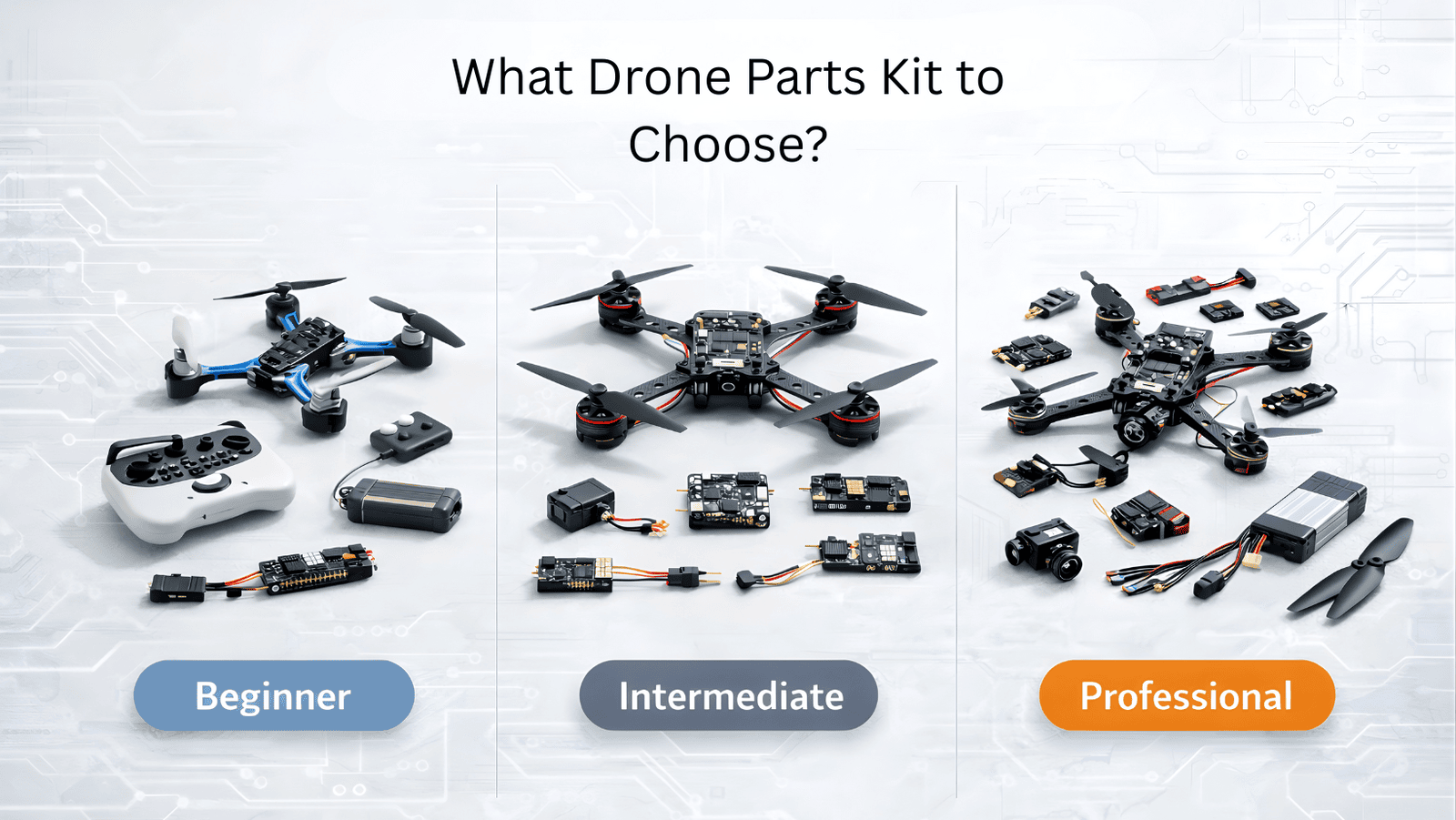
e. Trustworthy Drone builders make Quality Drones, so Pick Trustworthy Companies.
Read reviews from other customers on the companie's websites and find out if that kit worked for other people before making a purchase decision.5. The advantages to creating a drone from a kit include the following:
a. Learning Opportunity
When you build your own drone, you gain an understanding of electronic components, mechanics of flight, and how the drone works in the air.
b. Personalized Builds
Your drone can be customized to meet your personal preferences (e.g., how you plan to fly and what you want your drone to do) and price restrictions.
c. Cost Savings
Buying parts to create your own drone from a parts kit typically costs less than purchasing a finished drone that meets all your requirements.
d. Simple Repair/Upgrade
You can easily replace or upgrade each component of your drone without having to replace the whole thing.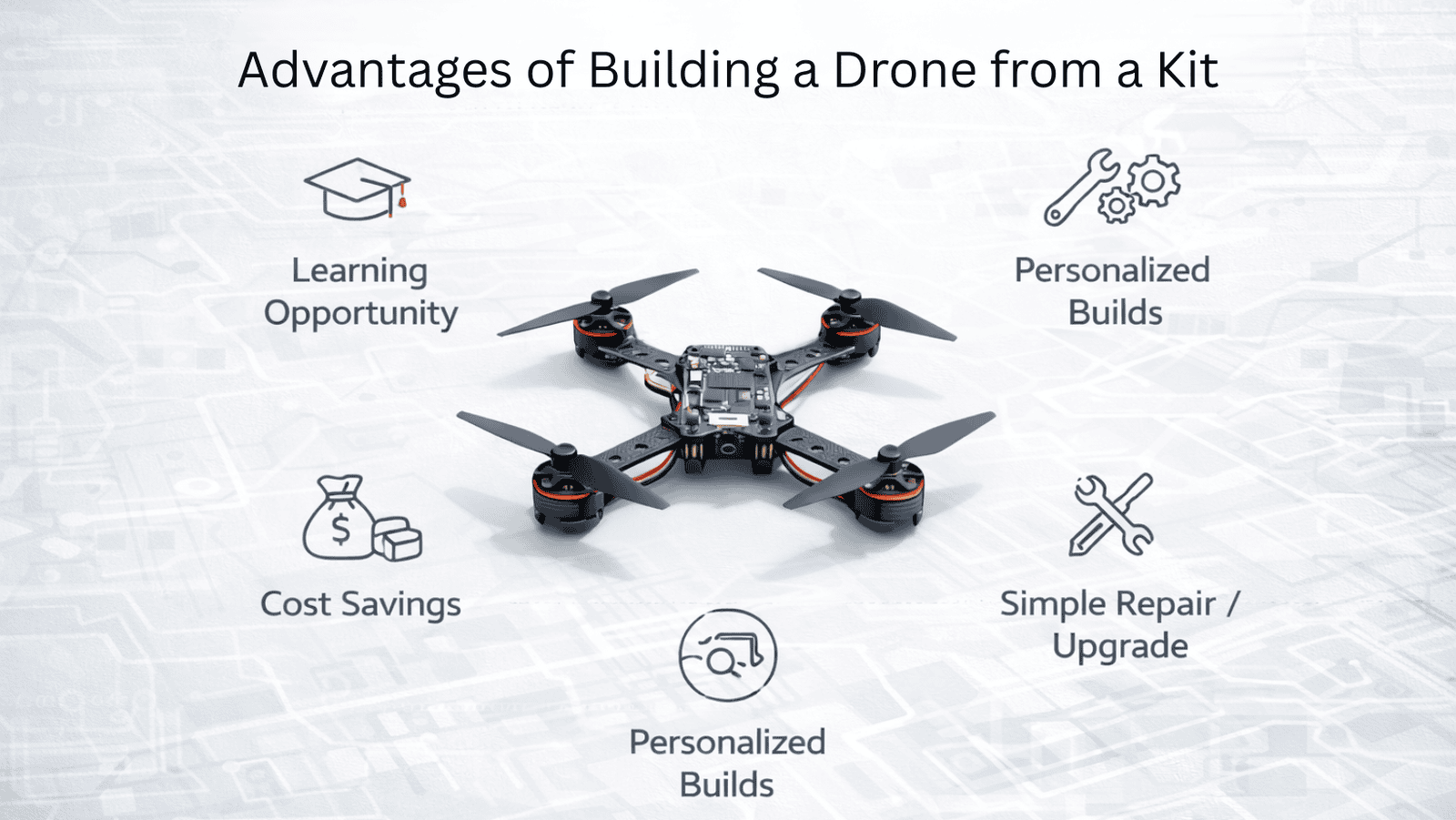
6. Do's and Don'ts When Buying a Drone Parts Set
a. Check for Compatibility
When you purchase a drone part, it's essential to ensure that it is compatible with your drone. Otherwise, you run the risk of either having subpar flying capabilities or a completely unusable drone.
b. Know What You're Getting
Most drones come in one complete kit and very few drones come with multiple parts or subassemblies. Many people end up paying more for parts because they weren't aware of what additional items would be included.
c. Don't Go Cheap
Cheap parts are almost always inferior in quality and will not last as long as more expensive ones and are also at risk for failure while flying.
d. Check Out User Reviews and Continue to Research Until You're Ready to Buy
Researching prices and product performance before making any kind of drone purchase helps to ensure that you're not making an expensive mistake by buying a cheap part.7. Safety & Legal Concerns
a. Following National Drone Regulations:
Follow national drone regulations, such as maximum altitude, restricted areas, etc.
b. Avoid Close Flying Near Other People:
Fly only in open areas and remain far away from all other people (including buildings or vehicles)
c. Maintain Visual Line of Sight:
At all times, keep the drone in view to assist with controlling the drone and having clear understanding of current conditions.
d. Drone Registration and Identifying Pilots as Required:
Some jurisdictions have drone registration and pilot identification requirements for drone pilots operating heavier drones.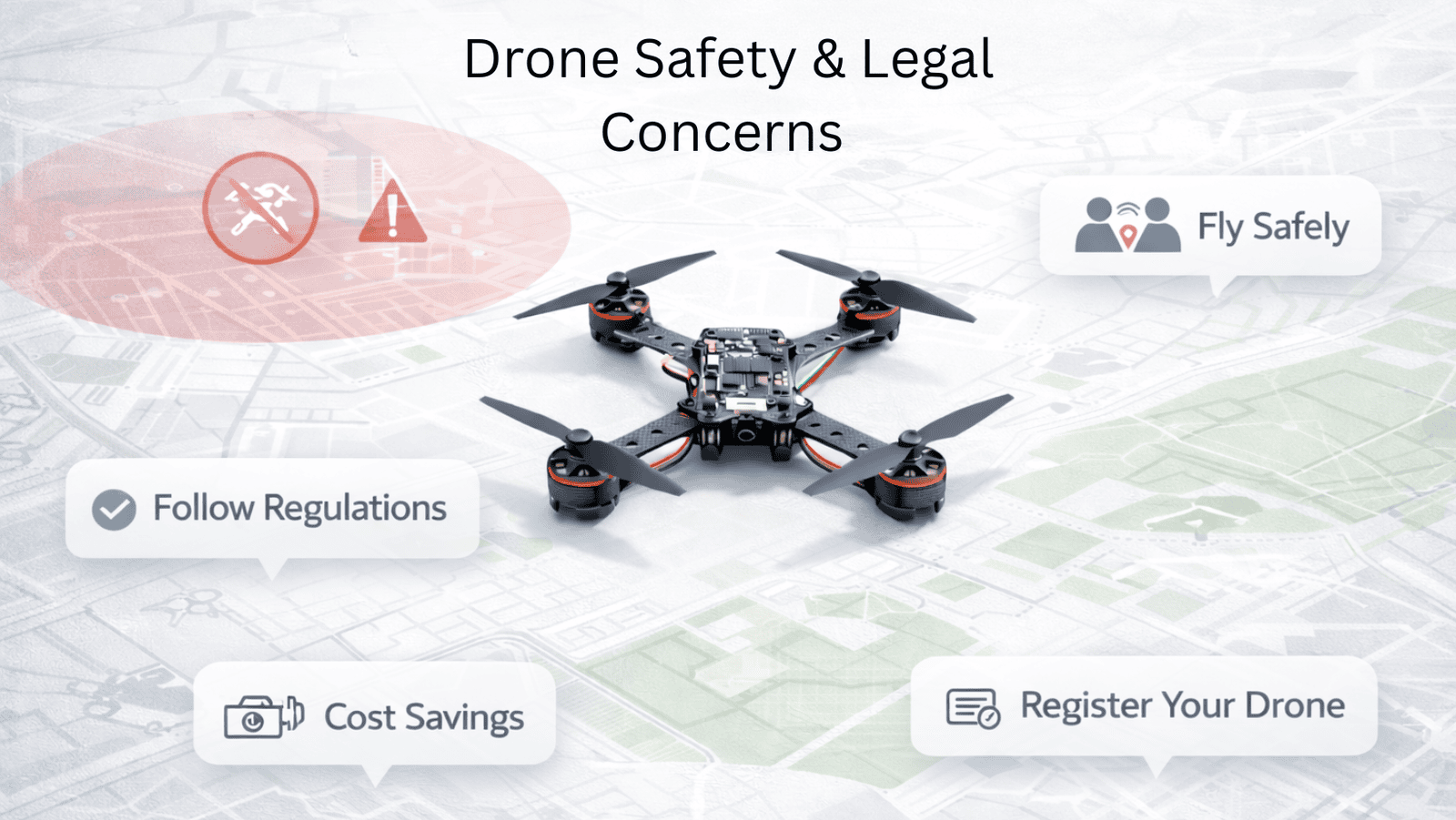
e. Never Fly if Battery is Swollen or Damaged:
Failure of a drone due to a swollen or damaged battery can lead to mid-air failure of the drone and potentially catch fire.8. Step-by-Step: How to Build a Drone
Step 1: Frame Assembly
Securely fasten all arm connections as well as both the top and the bottom of the frame to make sure that there is little to no flex or give at the connection points.
Step 2: Install Motors
Install the four motors using the appropriate screws for each of the arms and route the motor wires toward the center of the frame to maintain a clean and organized look for your completed drone build.
Step 3: Install Motor Controllers (ESCs)
Connect each motor to its electronic speed controller (ESC); if you are using a 4-in-1 ESC, bolt it to the frame and connect the wires from the ESC correctly to the battery connector.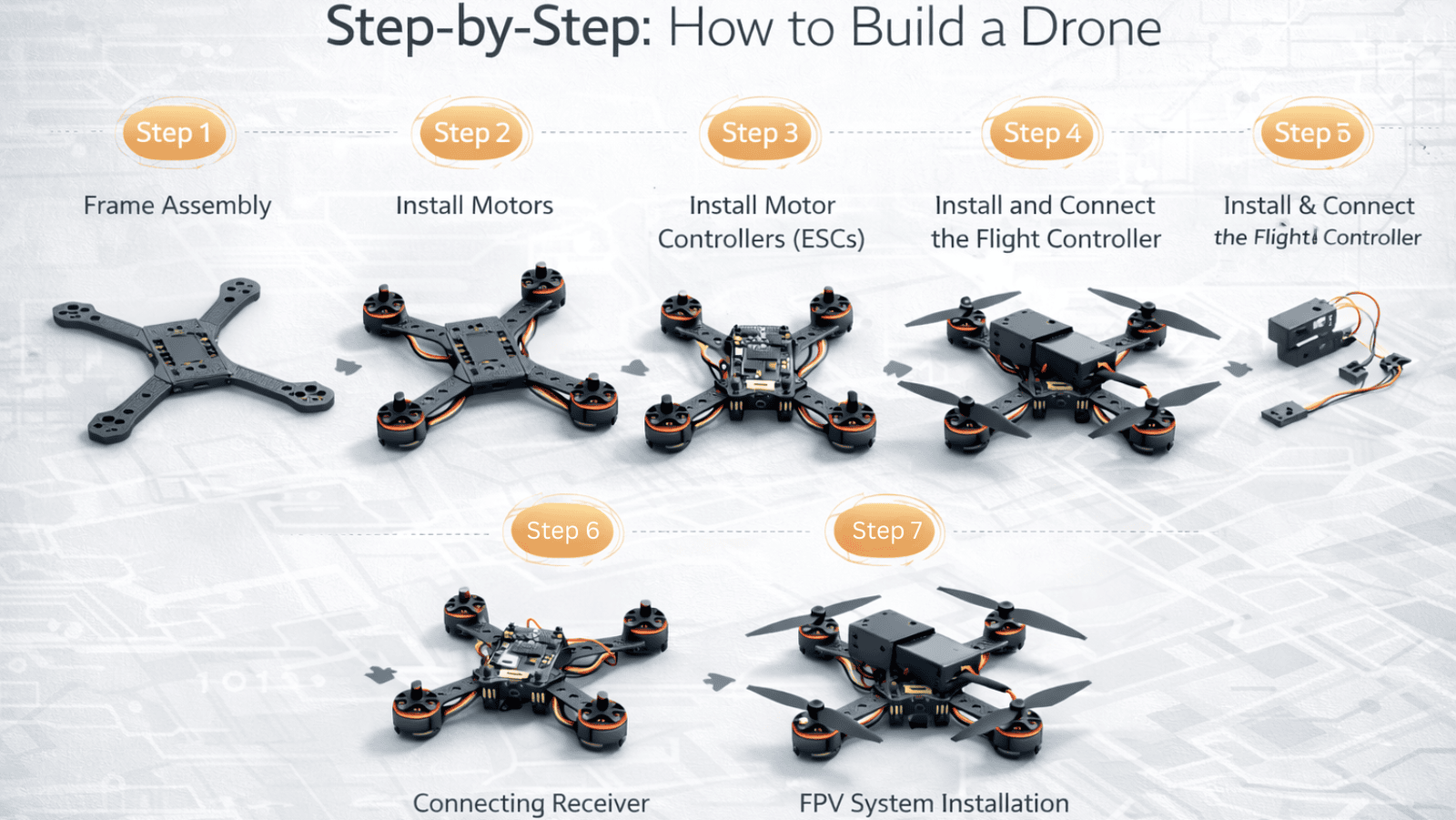
Step 4: Install and Connect the Flight Controller
Mount the flight controller with vibration-dampening pads on top of the ESC and connect the ESC signal wires to the flight controller for normal operation of the motors.
Step 5: Connecting Receiver To Flight Controller
Use a UART port to connect radio receiver and flight controller together; this enables communication between transmitter and drone.
Step 6: FPV System Installation
Mount the fpv camera on frame; connect camera to VTX. Antennas should be securely attached for quality video transmission.
Step 7: Battery Setup / Power Connection
Attach battery strap to frame; use either xt60 or xt30 connector to supply power. Make sure that battery is securely attached and will not move during flight.9. Conclusion
If you want to get away from buying off-the-shelf drones and learn more about how a drone works, you should purchase a drone parts kit. You will be able to build a drone from scratch, which provides you with a significant amount of hands-on experience and allows you to understand how each major component (frame, motors, flight controller, FPV, etc.) works together.
You can also select a kit that meets your skill level and intended use so that you have an easier time building your drone and obtaining a better performing drone! Generally, a drone parts kit gives you flexibility, easy customization and upgrades, which makes them great for either learning, flying as a hobby, or becoming more skilled or professional.